
Up until now, I’ve found myself writing less and less as most of my notes and assessments were being taken digitally. As such, I’ve began using more analogue methods of things I usually do digitally. Things such as setting reminders, note taking and scheduling. I also wanted to fix my notoriously bad handwriting that I have had throughout my schooling years, as my previous written notes are completely unreadable, even to myself.
Finding myself writing more often meant that I was also getting more interested on the different types of stationary out there. I have always wanted to try out a fountain pen, as it seemed to different than regular stationary that I have used previously. One of the fountain pens main selling points is its ability to write smoothly and effortlessly. This is due to fountain pens using liquid ink, as opposed to dry ink in ball point and gel inks. Therefore, you require little to no pressure when writing, making it very pleasurable and effortless to write.
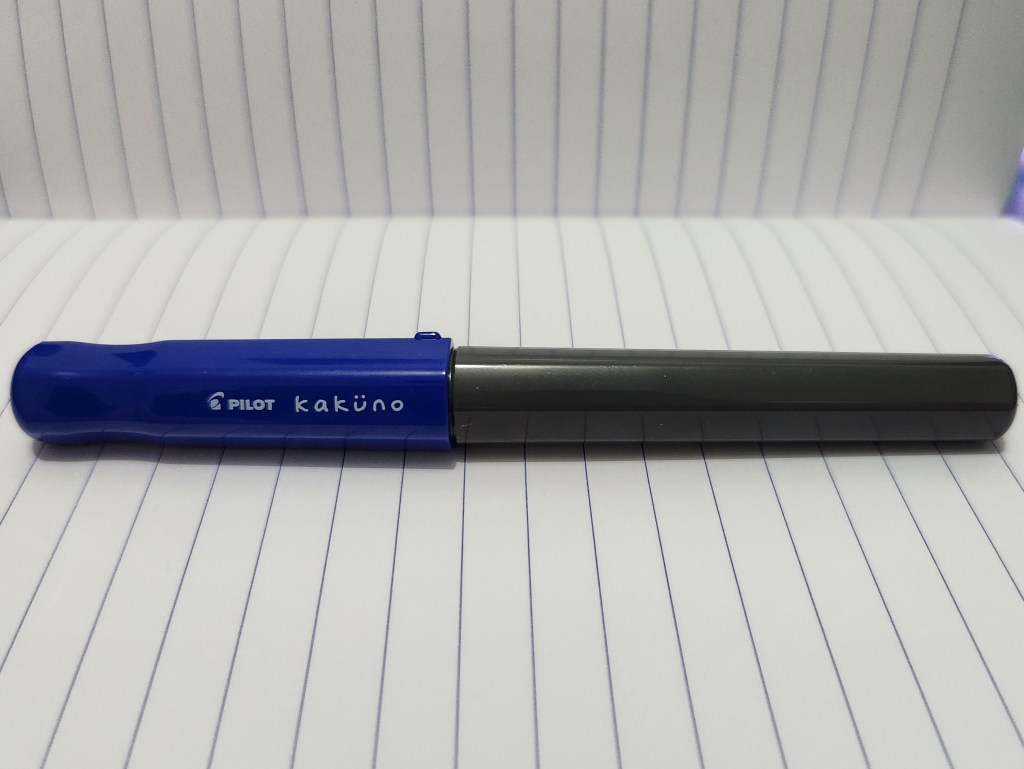
When looking online for suggestions there were various beginner options out there, one being the Pilot Kakuno. Ranging at around 20 AUD on Amazon, I decided to give it a go to see if it was something I’d like using.
I ended up going with the Pilot Kakuno with a Fine nib. Included with the pen was a disposable black ink cartridge. The process of preparing was simple. Just unscrew the body, insert the ink cartridge in the direction of the arrow, squeeze the cartridge gently a few times, screw back on the body and you’re ready to go.
As expected, writing with this pen feels great. It glides on paper very smoothly when writing. Needing little effort to write means you can write for much longer periods. The grip on the body is hexagonal, acting as guide to put your fingers on. Personally it feels comfortable to me, as I tend to write closer to the bottom of the pen. The ink didn’t feather on all of the papers that I’ve written on. It instantly became the main pen to write with.
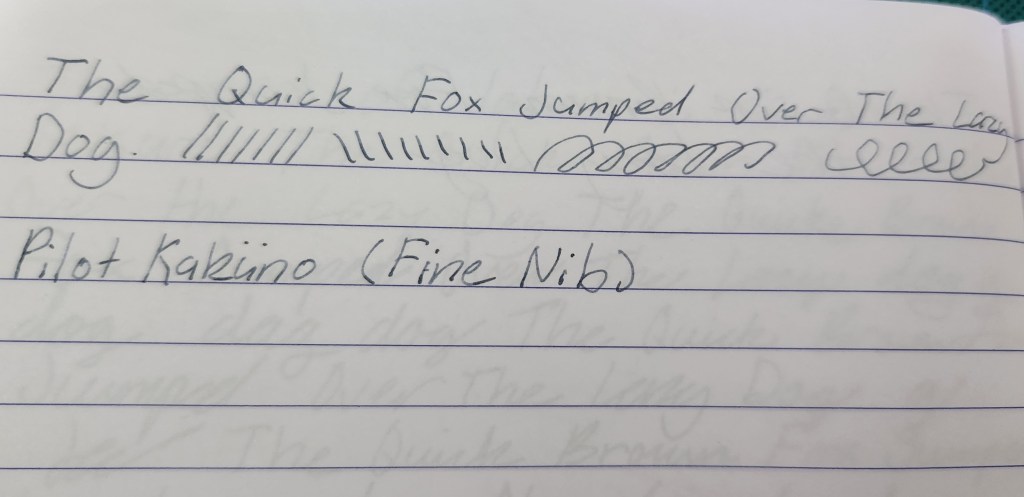
Eventually the ink in the cartridge ran out, giving me an opportunity to try out bottled inks. Another selling point of owning fountain pen is the wide variety of inks out there. Every ink has its distinct features that may be suited for certain tastes and writing situations. Plus, it’s much more environmentally friendly to use bottled inks as opposed to disposable inked cartridges to reduce waste.
To use bottled inks, you need to use a converter to store the ink inside the pen. I went with the Con 70, the highest capacity of out of all the converters compatible with the Kakuno.
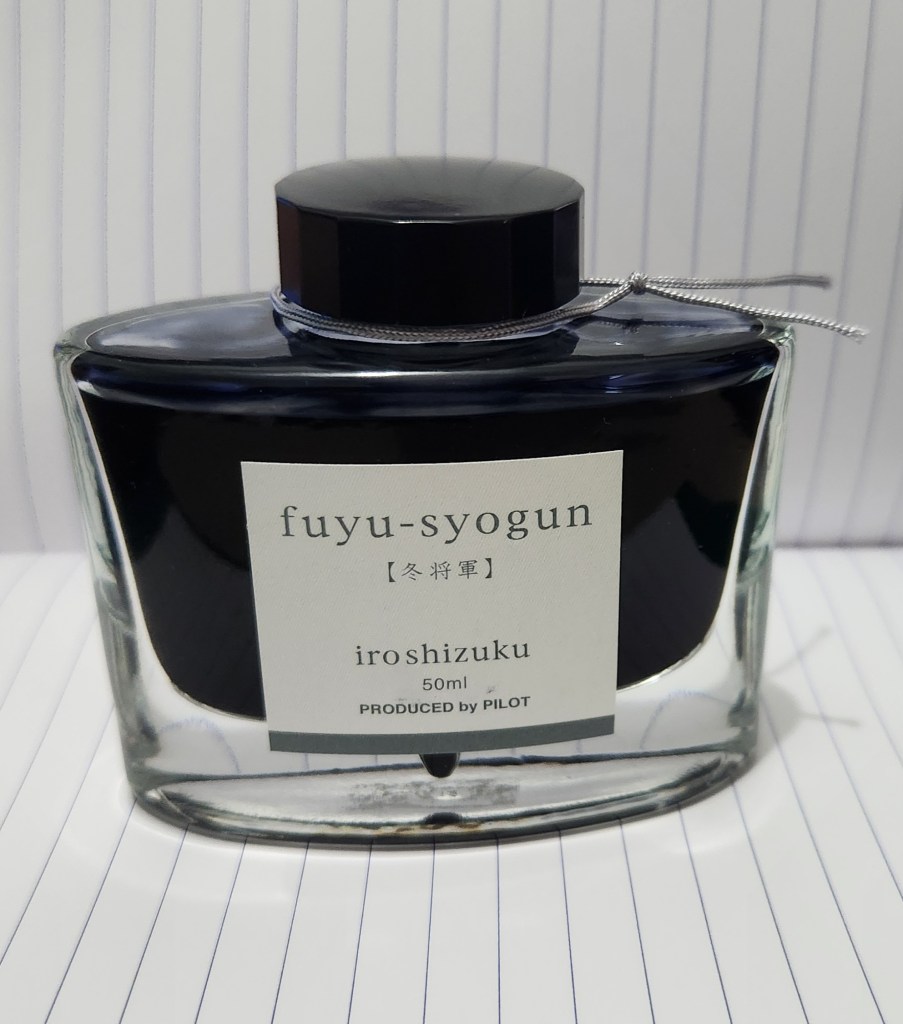
There are many brands with their own type of fountain pen ink, but I went with Pilot own fountain ink range, Iroshizuku. I went with the “fuyu syogun“; a cool grey with hints of blue. Again, it’s super smooth to write with.
Honestly, the Kakuno is super fun to write with and I always look forward to improving my handwriting skills with it. The rabbit hole for fountain pens is truly deep with the various brands, inks, nibs etc. out there. The opportunity of customization and personal expression is endless. I’m definitely interested in fountain pens and cannot wait to try out more.
Hope this post made you consider trying out fountain pens for yourself.
 acworks3.com